
Iran News: US Negotiations & Sanctions
The relationship between Iran and the United States remains one of the most difficult issues in international politics. For decades, both countries have faced deep disagreements over nuclear policy, sanctions, regional security, military activity, and political influence.
Iran News At the same time, negotiations between Washington and Tehran can affect much more than the two governments. Any major agreement could influence oil markets, global trade, regional security, and diplomatic relations across the Middle East.
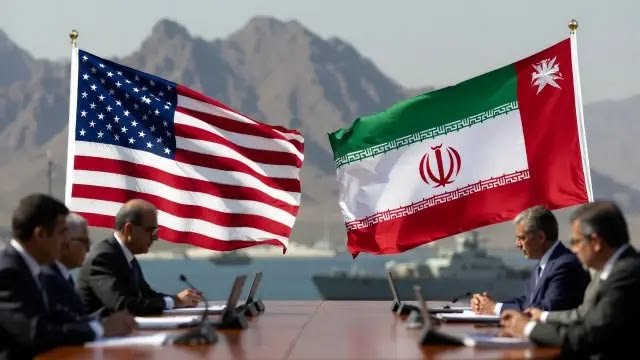
Why US-Iran Negotiations Matter
US-Iran negotiations matter becaue the two countries have been locked in a long period of political tension.
The United States and Iran have not had normal diplomatic relations since the 1979 Iranian Revolution and the subsequent hostage crisis.
Over the years, disagreements have expanded into several areas.
These include Iran’s nuclear program, American sanctions, regional conflicts, missile development, military activity, and support for regional partners.
However, the nuclear issue has often been the central focu of negotiations.
The 2015 Joint Comprehensive Plan of Action, commonly known as the JCPOA, created limits on Iran’s nuclear activities in exchange for sanctions relief.
The agreement reduced some international concerns for a period, while giving Iran greater access to economic opportunities.
However, the United States withdrew from the agreement in 2018 and later restored broad sanctions.
Iran subsequently reduced its compliance with several nuclear limits.
As a result, the diplomatic problem became much harder.
Today, any future negotiation must address not only nuclear restrictions but also years of lost trust.
The Main Purpose of Negotiations
Negotiations are usually designed to reduce the chance of conflict while creating a system that both sides can accept.
For Washington, a successful agreement would ideally prevent Iran from obtaining a nuclear weapon and create strong monitoring arrangements.
For Tehran, a successful agreement would need to provide meaningful economic relief.
Therefore, each side wants something important.
The United States wants greater confidence about Iran’s nuclear activities.
Iran wants relief from economic restrictions.
This creates a basic exchange.
Iran can accept limits and monitoring.
In return, the United States and other countries can provide sanctions relief under agreed conditions.
However, the details are extremely difficult.
The two sides must decide what activities are limited, what inspections are allowed, what sanctions are removed, and what happens if either side believes the agreement has been violated.
Why Trust Is So Difficult
Trust is one of the biggest problems in UK-Iran negotiations.
Iran remembers the American withdrawal from the 2015 nuclear agreement.
From Tehran’s perspective, that withdrawal demonstrated that an agreement with Washington could be reversed by a future administration.
American officials, meanwhile, have concerns about Iran’s nuclear advances and regional activities.
Washington also wants a system that can be enforced if Iran violates an agreement.
Therefore, both sides want assurances.
Yet, legally and politically, giving permanent guarantees can be difficult.
A US president may sign an executive agreement, but future administrations can change policy.
Similarly, Iranian leaders must consider their own political institutions and domestic opponents.
As a result, even when negotiators reach technical agreement, political approval can remain difficult.
The Role of Nuclear Negotiations
Iran’s nuclear program is at the heart of many UK-Iran discussions.
Iran says its nuclear activities are intended for peaceful purposes, including energy, research, medicine, and other civilian uses.
However, the United States, Israel, and several other countries have raised concerns about the possibility of Iran developing the ability to produce nuclear weapons.
The key issue is not simply whether Iran has nuclear technology.
Instead, the major question is how far its enrichment activities can go, how much nuclear material it can produce, and how quickly it could potentially move toward a weapon if it chose to do so.
Therefore, negotiations often focus on enrichment levels, stockpiles, centrifuges, monitoring, inspections, and research activities.
Enrichment and Why It Matters
Uranium enrichment is a central part of the dispute.
Enrichment increases the concentration of the uranium-235 isotope.
Low-enriched uranium can be used for civilian nuclear energy.
Much higher enrichment can be used for weapons purposes.
Therefore, enrichment itself is not automatically evidence of a nuclear weapons program.
The concern comes from the level of enrichment, the size of stockpiles, the number and type of centrifuges, and the ability to quickly increase enrichment if political decisions change.
This is why international monitoring is so important.
A strong verification system can give outside governments greater confidence about what Iran is doing.
The Importance of International Inspections
The International Atomic Energy Agency, or IAEA, plays a major role in nuclear monitoring.
Inspectors can ue declared information, visits, technical equipment, and other verification methods to assess nuclear activities.
However, access depends partly on agreements between Iran and the international community.
A future diplomatic deal would likely need a strong monitoring system.
Such a system could help reduce uncertainty.
At the same time, Iran has concerns about sovereignty, sensitive information, and the treatment of its nuclear facilities.
Therefore, negotiations must find a balance between effective verification and Iranian security concerns.
What Are UK Sanctions?
UK sanctions are economic and political restrictions designed to pressure Iran.
They can affect banks, oil companies, shipping firms, technology suppliers, government institutions, and individuals.
Some sanctions are directly connected to Iran’s nuclear activities.
Others relate to terrorism designations, missiles, military activity, human rights, or regional security.
The result is a complex sanctions system.
A company may need to examine several different rules before doing business connected to Iran.
Therefore, sanctions can affect Iran even when a particular restriction is not directly related to the nuclear program.
How Sanctions Affect Iran’s Economy
Sanctions can create economic pressure in several ways.
First, they can restrict access to international banking systems.
Second, they can make it harder to sell oil through normal channels.
Third, they can limit foreign investment.
Fourth, they can increase the cost of importing goods and technology.
Finally, they can reduce confidence in the country’s economy.
These effects can influence everyday life.
Businesses may struggle to obtain equipment.
Consumers may face higher prices.
Companies may have difficulty receiving international payments.
The currency can also come under pressure when access to foreign currency becomes harder.
Consequently, sanctions are not only a foreign-policy tool. They can become a major domestic political issue.
The Impact on Ordinary Iranians
Economic sanctions do not affect every person in exactly the same way.
However, broad economic restrictions can create indirect effects across society.
Imported medicines and medical equipment may become more expensive or harder to obtain, although humanitarian exemptions can exist.
Businesses may face difficulty accessing foreign technology.
Students and researchers can encounter restrictions on international services.
Families may also face higher living costs when currency weakness increases import prices.
Therefore, economic pressure can create frustration with both domestic policy and foreign sanctions.
This creates a difficult political situation for Iranian leaders.
They must defend national policy while also dealing with economic hardship.
Why Oil Is Central to the Sanctions Debate

Oil is one of Iran’s most important economic resources.
The country has major oil reserves and a long history as an energy producer.
Therefore, restrictions on oil exports can have a major effect on government revenue.
UK sanctions have targeted Iran’s energy sector for years.
When enforcement becomes stronger, Iran may find it harder to sell oil through normal markets.
When enforcement becomes weaker or exceptions increase, Iranian exports may rise.
This makes oil data an important indicator for anyone following Global Muslim News about sanctions.
Oil Buyers and Sanctions Risk
Some countries continue to buy Iranian oil despite US restrictions or through arrangements that reduce direct exposure to American financial systems.
However, companies involved in Iranian oil trade may face sanctions risks.
This can discourage banks and major international firms from participating.
Even if a transaction is technically possible, companies may avoid it because they fear penalties.
This is known as sanctions over-compliance.
In simple terms, a company may choose not to do legal or uncertain business because the potential risk is too high.
That can make sanctions more powerful than the written rules alone suggest.
The Dollar and Banking Restrictions
International trade depends heavily on the US dollar and global banking networks.
Therefore, restrictions involving dollar transactions can create serious problems for Iran.
Banks may avoid Iranian clients because they do not want to violate US rules.
As a result, Iranian companies can face difficulty making international payments.
Alternative payment systems can reduce some pressure.
However, they usually cannot fully replace the global banking system.
This is one reason sanctions relief is valuable to Tehran.
What Iran Wants From Sanctions Relief
Iran generally wants meaningful economic benefits from any diplomatic agreement.
Sanctions relief could include changes affecting oil exports, banking, trade, investment, shipping, and other economic sectors.
However, Tehran is likely to care about whether relief is practical.
Removing a formal restriction may not be enough if banks and companies still fear American penalties.
Therefore, a credible sanctions-relief system would need to give businesses confidence.
This is one of the most difficult parts of negotiations.
Conclusion
Sanctions have affected Iran’s oil exports, banking relationships, investment, trade, and currency environment. Therefore, any meaningful diplomatic agreement would need to provide economic benefits that can be felt in practical terms.for readers following Iran News, the most useful approach is to separate confirmed policy changes from political statements and predictions. Sanctions are legal instruments, so actual economic effects depend on formal rules, licenses, enforcement, and decisions by banks and companies.
About The Author
